LE screen 1

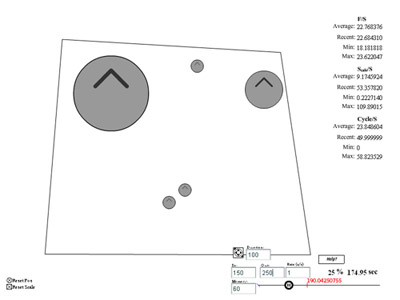
It’s been a while since I updated on the old Liberty Engine so here it is with a lot more polish than the last demo. You still can’t modify the objects or forces just yet, but I sharpened up everything else. It’s running much more efficiently, with stats, an improved console and new keyboard commands. It also includes a “Help” button that will explain all of its functions on mouse-over.

Here is a swf copy as well as an exe. I haven’t seen much of a performance difference between the two:

The default “memory” setting is 60 seconds, so if you play more than 60 seconds it will begin deleting old data. This is meant to prevent the program from filling your computers memory and lagging or crashing. However, you can set the memory value to Infinity and see how much you can hold without slowdown. I found a loss of about 2 or 3 fps with 1 hour of data. I average about 6 or 7 calculated seconds per actual second (Scalc/S) so you should be able to set the rate of time passage to as high as 6 without playback time ever passing up calculation time. But play around with it and let me know how it runs on your machine. I could use the feedback!

With your time rate set to 6, you can get through an hour of simulation in 10 minutes.

Continue Reading…

Series: Robot Music I, Robot Music II: Modes, Robot Music III: The Circle of Fifths, Robot Music IV: Scales of the World

Robot Music Logo - Circle of Fifths

So far everything has been derived from the Major Scale, but now I have some new scales to introduce. These are foreign and exotic scales with fascinating new sounds!

After RM1 as a proof of concept, RM2 introduced the Major modes and RM3 explained how they work. Now RM4 will introduce new scales and–guess what?–RM5 will explain how they work. This episode also includes a bit more information on chords.

TO THE SCALES!

Continue Reading…

Contra_4_Coverart

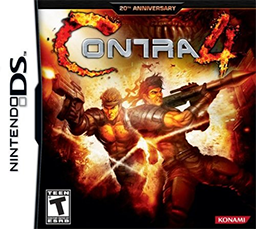
You have to understand that I can rarely complete a conversation on games without bringing up the Contra series, and most importantly, Contra III: Alien Wars. I played the previous big Contra games when I was a kid and had fun with them, but when Contra III showed up, it exploded my brain. You have to understand this if you hope to imagine the excitement I felt when Contra 4 was announced for the Nintendo DS.

Needless to say, I’ve played the game and it’s great . . . but I have my complaints. Continue Reading…

Suggested Reading

Books are the most rich source of information and inspiration that game players don’t use. If you’re looking for some new resources, you may be interested in a short list that I’ve compiled. Each one is worth its own review and maybe someday I’ll do just that.

These books are guaranteed to give players a greater appreciation of their games and help developers make better ones. Continue Reading…

I just heard about Eve Online’s Player government setup and man am I jealous.

Eve Online Screenshot 01

This is a voting booth.

It’s great that they’re exploring the area of player government, but it sounds like they’re being somewhat timid about it. The players don’t seem to have a tremendous amount of power and the governmental system within which elections are occurring was constructed and is enforced by the developers rather than emerging organically from the players themselves. It’s not a bold step, but a step nonetheless.

This has prompted me to publicize some of my own experiences in regards to player governments. Anyone I’ve seriously spoken to about games has heard all about these because I’ve found them to be unique and tremendously valuable.

Continue Reading…

Series: Robot Music I, Robot Music II: Modes, Robot Music III: The Circle of Fifths, Robot Music IV: Scales of the World

Robot Music Logo - Circle of Fifths

New logo baby.

Robot Music I proved that a pleasing song can be randomly generated under the right guidelines. Those guidelines stuck to a 4/4 rhythm and the C Major Pentatonic Scale.

Robot Music II proved that the C key could be replaced with any other (changing the root). It also showed that the Major Pentatonic Scale (5 notes) could be expanded to the Major Scale (7 notes) without harming our method. And most importantly, this section covered modes and demonstrated that shifting a song’s mode can significantly change its tone. Knowing that the tone can be changed, how can we control it?

Robot Music III introduces the Circle of Fifths. It is a basic musical tool that will help us predict the impact of a mode of the Major Scale. With it, our Robot can place notes along 2 dimensions (Consonance vs. Dissonance, Dominance vs. Sub-Dominance) and estimate the emotional impact of a note according to an arbitrary algorithm based on personal tastes.

This installment is the first to go into the perception of music. To begin, we must discuss aural perception and some musical fundamentals. That technical information will be related to our previous musical concepts by the use of the Circle of Fifths. And finally, a demonstration of mode relationships and some discussion of their popular uses.

You probably already know some of this, so I’ll try to move fast.

Continue Reading…

It has come to my attention that when I put up these forwarded posts, people come look at them! So here’s another one.

Citizen Kane - Opera House

I’ve a compilation of opinions this time. A dominoed trail of disagreement leading through the mouths of Roger Ebert, Jim Preston and E. Daniel Arey. Each of course followed by my charming additions <3. And finally, I end our tour d’text with a look at Arey’s comparison between Ico and Citizen Kane.

Ebert

Critiquing the film adaptation of the popular video game Hitman, Ebert states:

. . . video games will never become an art form — never, at least, until they morph into something else or more.

Like what, I wonder. Maybe until they morph into movies or become something like a swiss army knife. Nothing smears your misteps like a good old contradiction, friend: never and until being the operative words. In a stroke of literary genius, Ebert contrasts the wanting state of games against his own mastery of propaganda; the delicate power to write a word while only conveying the vaguest semblance of an idea (and without a shred of evidence!).

Needless to say, the review caught some attention among the gamed (gām·ĭd) and it was time for Jim Preston to say his piece. Continue Reading…

Close Up Die

Series: Robot Music I, Robot Music II: Modes, Robot Music III: The Circle of Fifths, Robot Music IV: Scales of the World

It’s been a long while, but response to the last music post was enough to get me revved up again. Now it’s time to continue with the Robot Music series on procedurally written music.

I wanted this tutorial to be simple, but educational enough that if you wanted to study more, you would know where to look. For that reason, there is a lot of music vocabulary in here. I’ve done my best to explain each term as it comes up, but if any remain confusing, don’t hesitate to look them up elsewhere or even skip them. You can probably forget all of the fancy words and still understand the important concepts being discussed.

In the last session we rolled a die to generate riffs in a Major Pentatonic Scale. Sticking to that one scale limits the sound of your music a lot, so now we’ll mix up our technique by exploring modes. We’ll be replacing the Major Pentatonic Scale with the full Major Scale. The pentatonic only has 5 notes, while the entire Major Scale has 7. Those last two notes can be seen as bothersome* which is why they were left out last time.

Most people’s first musical revelation is the amazing power of switching between a Major scale and a Minor scale. It’s often generalized that when a song is in the Major scale it sounds happy and when it’s in a Minor scale it sounds sad. That is the effect we will be looking into to change the emotional impact of robot songs.

Continue Reading…

Just another upsetting Gamasutra article that I had to post to and figured I’d stick up here too. You know, I have write-ups on here just waiting to be finished and posted, but when I get caught up with work the only times I seem to finish writing are when someone manages to piss me off. I really gotta do something about that. . . .

Anyway, this one is Chris Dahlen‘s plea for new and exciting settings for games, specifically Africa. Among other reasons, he claims that games about blowing Africa to bits are more realistic than films about saving Africa. If one thing is unrealistic, the extreme opposite of that must be the truth? Right? . . . Right?

It was a good chance for me to talk Post-Colonialism for a bit. I’m sure you could apply much of it to games in general. Here’s the article and here’s my response:

That kid you mentioned, the one that wondered if the entire world could be burned down; you’re right about him not being a neo-imperialist sociopath. He’s just asking a relevant question. The discussion was about what could be done in the game, the possibilities brought about by its capabilities, and when you’re being told about each component of a world being flammable, it’s reasonable to ask if all of them are.

This article, however, packs quite a colonialist message. Exotic locations “should” be used in games solely for their exoticism? I guess Africa is a place where us rich, white people go to blow things up for fun. After all, that’s what most of these games are about, right? A white male with apparently no problems in his life except for a single immediate threat which he can fix with a few well placed shots (or badly placed explosions). I don’t think that’s what you want to say, but it’s the message. Continue Reading…

Update: The Liberty Engine: Running Clean

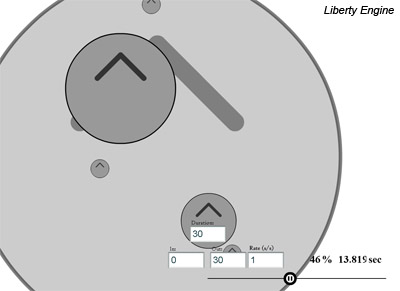
I’ve been all damn talk for too long. Ladies and gentlemen, I give you, the Liberty Engine Demo!

Liberty Engine demo 1

CONTROLS:

-Click the scrolling play button (or press space) to pause the animation.

-“In” and “Out” values determine number of seconds into the animation that the loop will begin and end.

-“Rate” determines the speed at which time will pass (seconds per second).

-“Duration” is the duration of the loop. If modified, it will automatically change the “Out” value.

-All forces in the system are set to enact at the 10 second mark and all calculations end at the 30 second mark.

Aside from the animation controls, this is not an interactive demo. Interactivity will probably be in the next one, but this demonstrates all of the engine principles. You’ll notice a slight lag period just as the swf loads. That’s because it is calculating all of the physics for the entire animation during the first frame. It saves all of that data and then replays it based on the passage of time. That’s why you can scroll back and forth or play at different rates (super slow-motion or fast-forward). The animation is actually set to 40fps, but I guarantee your browser can’t keep up with that speed. Fortunately, because the engine is time based rather than frame based, dropped frames do not effect the rate of movement. Oh, and by the way this is in AS2. I’ll translate it to AS3 later.

I haven’t mentioned the Liberty Engine up here very much, but it’s been a project of mine for over a year now. The concept behind the Liberty Engine is to create a physics engine that ANYONE can use; to liberate the thousands of young game developers without the programming or mathematical know-how to build the kind of games they dream of and provide it for public use free of charge. I hope, with a powerful and easy-to-use engine like this one, to foster a serious indie gaming movement at the grassroots level.

Continue Reading…